Take a close look at the smooth metal casing of your smartphone, the sleek blade of a high-end chef’s knife, or the polished surface of a medical implant. To the naked eye, they look perfectly flat. But in the advanced frontiers of manufacturing, engineers are discovering that adding microscopic patterns to these smooth surfaces can completely change how they behave.
This process is called Laser Surface Texturing (LST).
Using ultra-fast, highly precise lasers, LST acts like a microscopic chisel, sculpting thousands of dimples, grooves, or ripples onto a material’s surface. This technology doesn’t change the chemical makeup of the metal or plastic; instead, it uses geometry at the micro-scale to unlock mind-boggling new properties. Here is a deep dive into the world of laser texturing and why it is revolutionizing modern engineering.
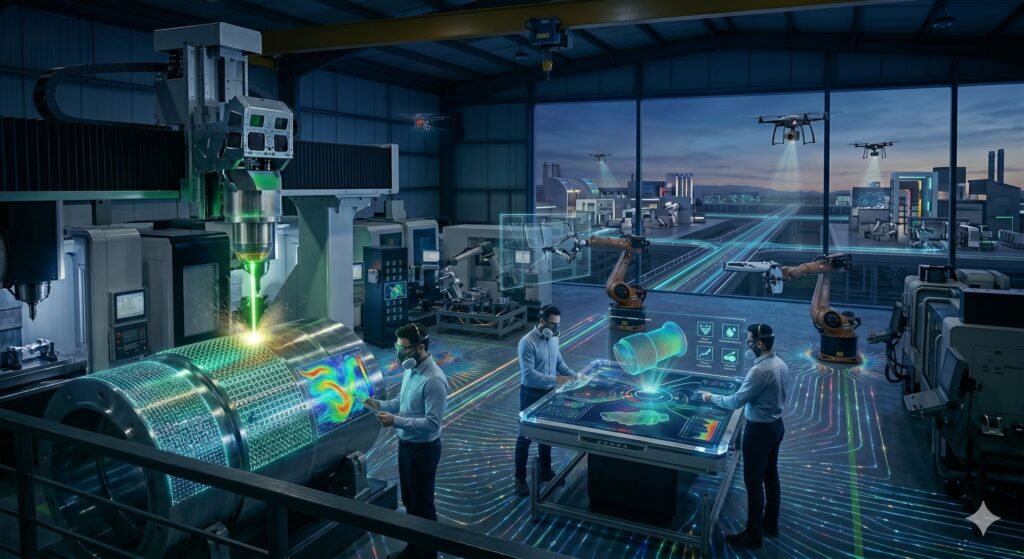
1. The Mechanics: How Light Becomes a Chisel
Traditional methods of texturing surfaces—like sandblasting or chemical etching—are often messy, inaccurate, and environmentally hazardous. They are blunt instruments trying to do surgery.
Laser Surface Texturing, by contrast, is a masterclass in digital precision. The process relies on Pulsed Lasers, specifically nanosecond, picosecond, or femtosecond lasers. These lasers don’t just heat up and melt the material; they deliver energy in bursts that last a mere trillionth of a second.
This ultra-short blast causes the target material to instantly vaporize (a process called ablation) without heating or warping the surrounding area. By controlling the laser’s path via advanced software, manufacturers can create highly uniform matrices of micro-grooves, grids, or cross-hatched patterns with absolute repeatability.
2. The Superpowers of a Textured Surface
Why would we want to make a smooth surface bumpy? By manipulating the microscopic topography of a material, engineers can dramatically alter its physical interactions with the environment.
A. Slashing Friction and Wear (The Dimple Effect)
In mechanical systems like engines, hydraulic pumps, or thrust bearings, moving parts slide against each other constantly. By laser-machining an array of microscopic dimples onto these sliding surfaces, two amazing things happen:
- Micro-Hydrodynamic Bearings: When a lubricant (like oil) passes over the dimples, each tiny pocket generates a microscopic pocket of fluid pressure, physically pushing the two sliding surfaces apart and reducing friction.
- Debris Traps: Any microscopic metal shavings or wear debris generated during operation fall harmlessly into the dimples instead of scratching and scoring the main moving parts.
B. Controlling Liquids: Hydrophobic vs. Hydrophilic
Have you ever seen water roll off a lotus leaf without leaving a single drop behind? LST can recreate this phenomenon on metals and plastics. By carving specific micro-pillars onto a surface, you can trap a cushion of air beneath any water droplet, causing the water to bead up and slide off instantly.
This creates Superhydrophobic (water-repelling) surfaces that prevent ice accumulation on airplane wings or rust on marine equipment.
Conversely, you can create Hydrophilic (water-attracting) textures that ensure adhesives, paints, or biological fluids spread perfectly and bond permanently to the material.
C. Enhancing Medical Implants (Osseointegration)
When a patient receives a titanium hip or dental implant, the body needs to accept it. If the titanium surface is perfectly smooth, human bone cells struggle to grip it.
By using LST to create a microscopic texture that mimics the natural porous structure of human bone, bone cells can easily anchor themselves to the implant, drastically accelerating the healing process and reducing implant rejection rates.
3. Changing the Rules of Light: Optical Texturing
LST isn’t just about mechanics and fluids; it can also manipulate light. By creating surface structures that are smaller than the wavelength of visible light, lasers can completely alter how a material looks.
For instance, by texturing solar panels with microscopic cone shapes, the glass traps incoming sunlight, bouncing it internally rather than reflecting it away. This allows the solar cell to absorb significantly more light and produce more green energy.
In consumer electronics, this same light-trapping technique can turn shiny, reflective aluminum into an ultra-premium, velvety matte black finish without using a single drop of toxic paint or chemical dye.
The Bottom Line
The old engineering assumption was that smoother always equals better. Laser Surface Texturing has completely shattered that myth.
By treating the surface of a material as a canvas for micro-engineering, LST bridges the gap between raw material limits and advanced performance needs.
Whether it is making car engines more fuel-efficient, ensuring medical implants last a lifetime, or creating self-cleaning materials, the future of manufacturing isn’t happening on a grand scale—it is being written one microscopic laser pulse at a time.