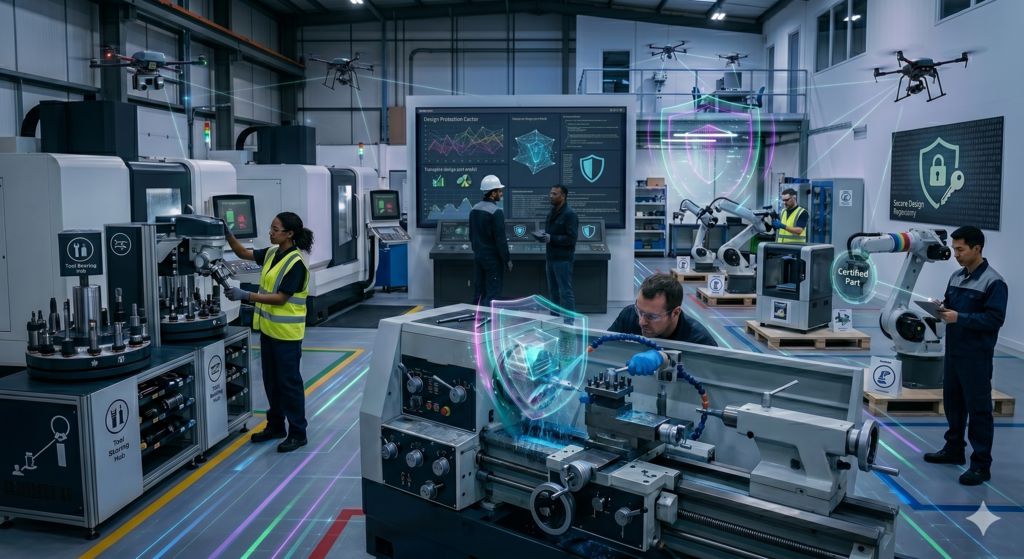
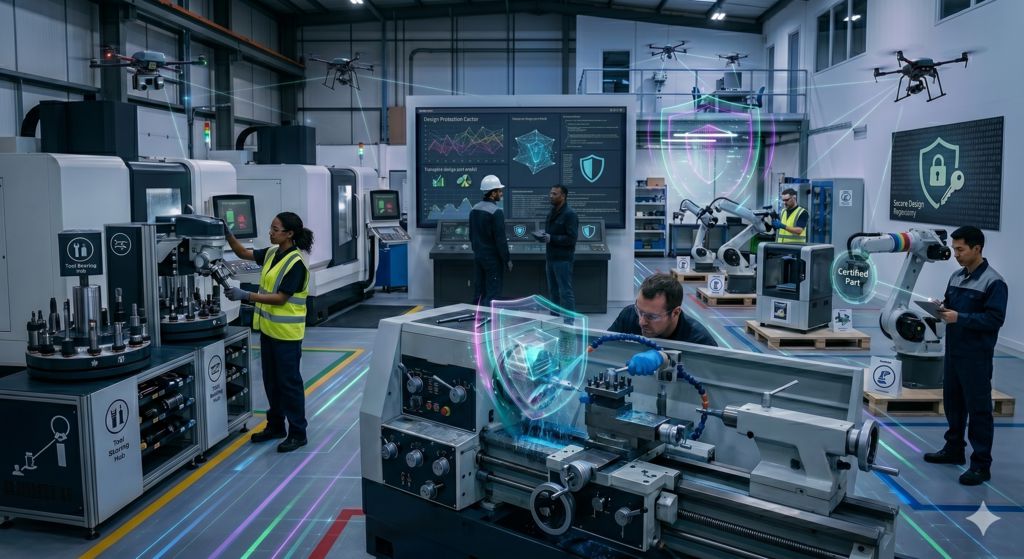
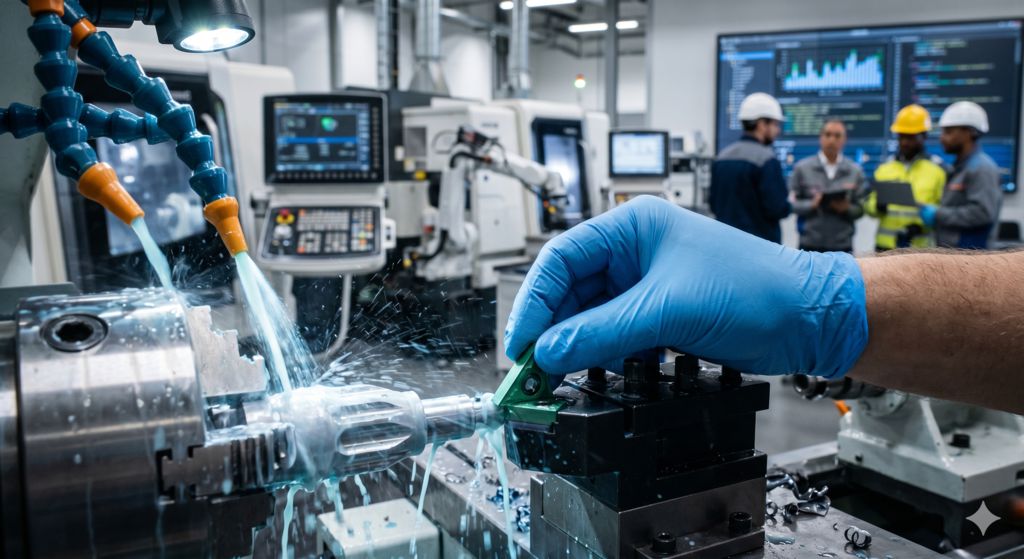
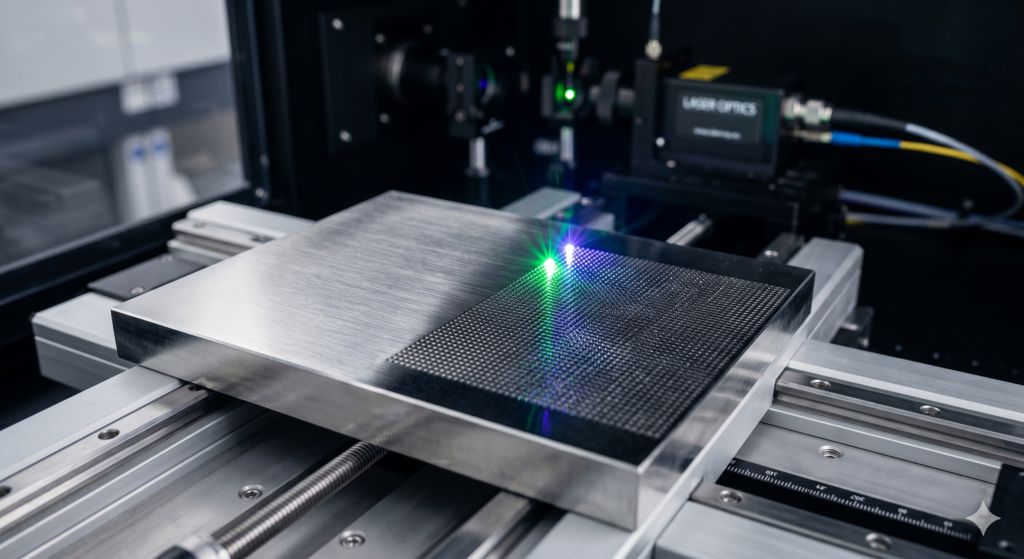
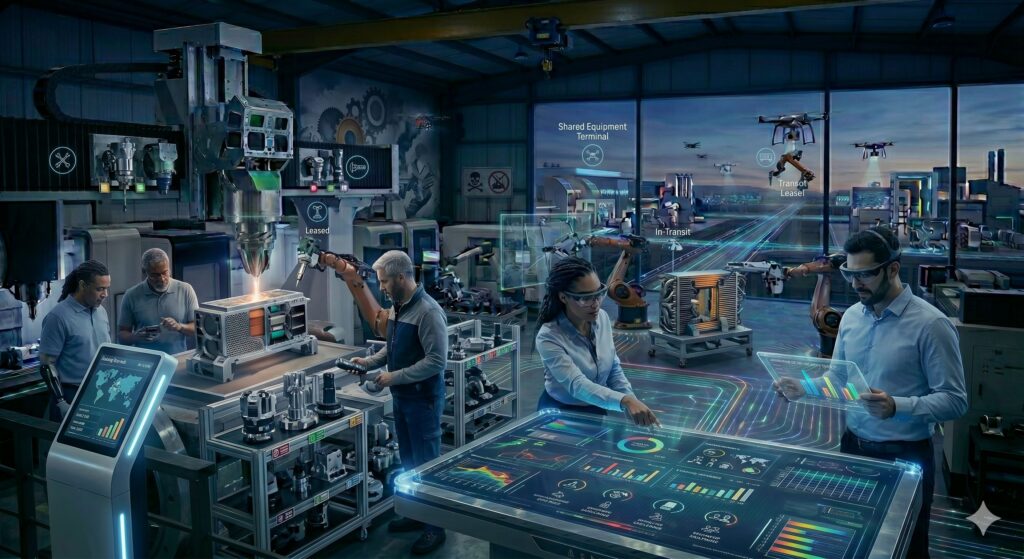
The Next Frontier: How Miniaturization and Intelligence Are Reshaping Precision Machining

For decades, the metric of success in the machining industry was "Horsepower and Iron." The biggest machines removing the most material in the shortest time won the contract.

Today, the paradigm has shifted. As we advance deeper into the era of Industry 4.0 (and approach Industry 5.0), the battleground for manufacturing supremacy has moved to two distinct fronts: the microscopic scale of the components and the digital intelligence of the workflow.

For OEMs and procurement leaders, understanding these trends is no longer optional—it is essential for identifying supply chain partners capable of meeting the demands of next-generation medical devices, semiconductors, and aerospace avionics.

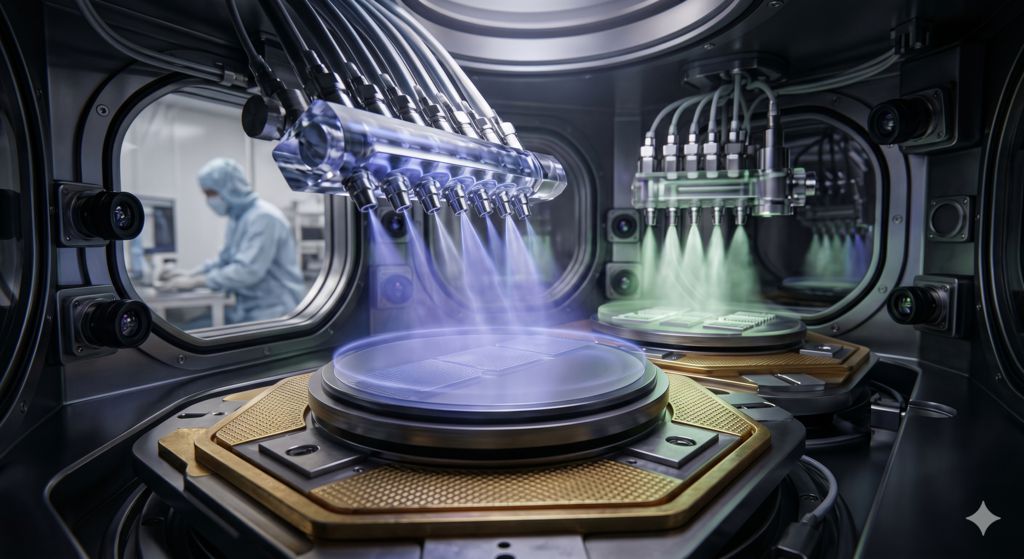
Micro-Machining_unisontek2

Trend 1: Micro-Machining (The Race to the Bottom)

As devices shrink, the components inside them must follow suit. However, Micro-Machining is not simply "regular machining, but smaller." It is a distinct discipline that requires a fundamental rethink of physics and material science.

The Demand Drivers

  • Medical Technology: Minimally invasive surgical tools, implantable sensors, and micro-fluidic drug delivery systems.

  • Electronics: Connectors with pitch sizes under $0.3\text{ mm}$ and probe pins for semiconductor testing.

  • Optics: Mounts for fiber optics and laser collimators requiring positional accuracy in the sub-micron range.

The Technical Challenge

In traditional machining, the grain structure of the metal is negligible compared to the part size. In micro-machining, a single metal grain can be the size of the cutting tool's flute.

  • Tooling: We are now seeing end mills with diameters as small as $0.01\text{ mm}$ (smaller than a human hair). These tools cannot be seen by the naked eye and break with the slightest vibration.

  • RPM Requirements: To achieve the correct surface speed (SFM) with such small tools, spindles must run at 30,000 to 60,000 RPM with virtually zero runout.

  • The "Chip" Problem: At this scale, the cutting tool often "ploughs" the material rather than shearing it, requiring specialized cutting geometries and high-pressure coolant strategies.

Procurement Insight: When sourcing micro-parts, general machine shops often fail. Look for suppliers with specialized "Swiss-style" lathes and high-frequency milling centers dedicated solely to micro-applications.

Trend 2: Smart Manufacturing (The Digital Brain)

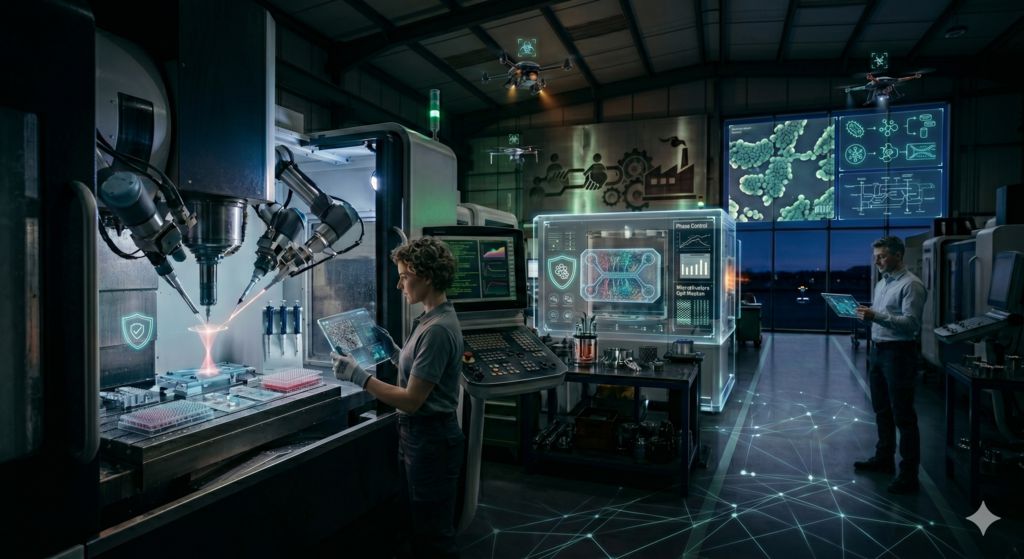
The modern machine shop is becoming less of a factory and more of a data center. The integration of IoT (Internet of Things) and AI is solving the industry's biggest pain points: inconsistency and downtime.

1. The Digital Twin

Before a block of expensive Titanium is ever clamped into a machine, its entire manufacturing lifecycle exists virtually.

  • What it is: A precise virtual replica of the machine tool, the fixture, the tool holder, and the raw stock.

  • The Benefit: Engineers can run the simulation to detect collisions, optimize tool paths to shave off seconds, and predict surface finish quality. This moves the "trial and error" phase from the physical world (expensive) to the digital world (cheap).

2. Predictive Maintenance (No More Surprise Breakdowns)

In the past, a spindle bearing would seize unexpectedly, halting production for weeks.

  • The Solution: Modern machines are laden with vibration sensors and thermal probes. AI algorithms analyze this data stream to detect the "signature" of a failing component weeks before it breaks.

  • The Result: Maintenance is scheduled during non-production hours, ensuring On-Time Delivery (OTD) rates remain stable for customers.

3. Closed-Loop Manufacturing

This is the holy grail of quality control.

  • The Process: A machine cuts a feature $\rightarrow$ An automated probe measures the feature inside the machine $\rightarrow$ The data is fed back to the controller $\rightarrow$ The controller automatically updates the tool offset to correct for tool wear or thermal expansion $\rightarrow$ The machine finishes the cut.

  • The Impact: This eliminates human error and manual adjustment, ensuring that the 1st part and the 1,000th part are mathematically identical.

Smart Factory_unisontek2

Trend 3: Hybrid Manufacturing

The line between "Additive" (3D Printing) and "Subtractive" (CNC Machining) is blurring.

We are seeing the rise of Hybrid Machines: 5-axis units equipped with both a milling spindle and a laser sintering head.

  1. Build: The machine prints a complex internal lattice structure (impossible to machine) using metal powder.

  2. Cut: The machine switches to a milling tool to precision-finish the critical sealing surfaces and bearing bores.

This allows engineers to design parts with the geometric freedom of 3D printing but the precision tolerances of CNC machining.


Conclusion: What This Means for the Buyer

The gap between "low-end" and "high-end" machine shops is widening.

  • Low-End Shops will continue to fight on price for simple, low-tolerance commodity parts.

  • Smart Manufacturers are investing heavily in micro-capabilities and digital integration. Their hourly rates may be higher, but their total cost of ownership is lower due to reduced scrap rates, faster NPI (New Product Introduction) cycles, and guaranteed reliability.

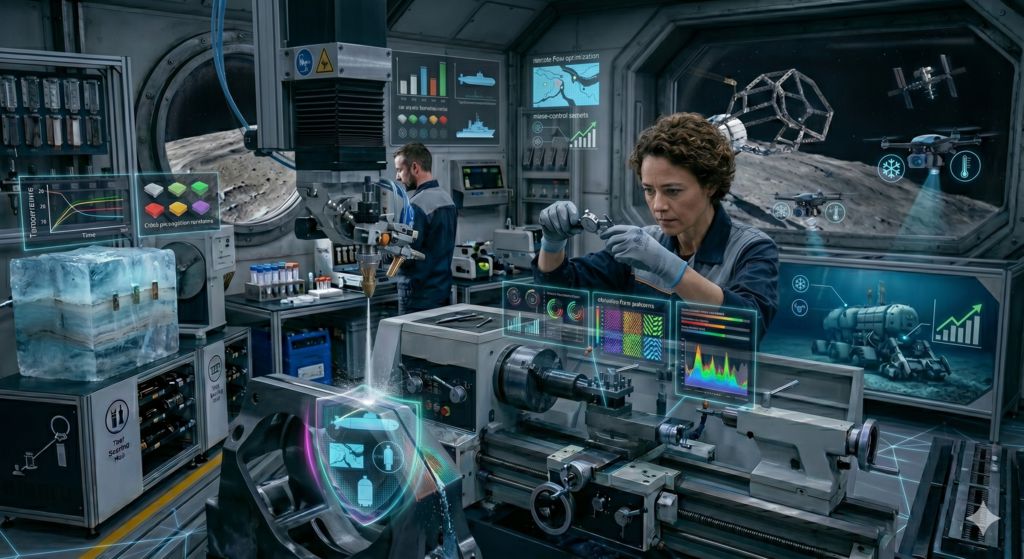
Hybrid Manufacturing_unisontek2

The Art of Compromise: A Strategic Guide to Material Selection in Precision Machining

In the initial design phase of a mechanical component, the focus is almost exclusively on performance. Will this part withstand the load? Will it survive the thermal environment? Is it light enough?

However, once that design hits the desk of a Procurement Manager or a Manufacturing Engineer, the focus shifts to manufacturability and cost. A common pitfall in precision machining is "over-specification"—selecting a material that exceeds the performance requirements by a wide margin, inadvertently driving production costs through the roof.

The secret to cost-effective manufacturing lies in understanding the Machinability Index—a measure of how easy it is to cut a material. Lower machinability means longer cycle times, higher tool wear, and ultimately, a more expensive part.

This guide explores how to balance technical performance with commercial reality.

Material Selection in Precision Machining_unisontek

1. Aluminum: The Industry Workhorse

Aluminum is the most common material in CNC machining for a reason. It offers an excellent strength-to-weight ratio, high thermal conductivity, and, most importantly, incredible machinability.

The Debate: 6061-T6 vs. 7075-T6

  • Aluminum 6061-T6 (The Standard):

    • Performance: Good general-purpose strength, excellent corrosion resistance, and weldability.

    • Cost: Low raw material cost; very fast machining speeds.

    • Verdict: The Default Choice. Unless you have a specific reason not to, start here. It is perfect for brackets, enclosures, and structural components.

  • Aluminum 7075-T6 (The Aerospace Grade):

    • Performance: High strength (comparable to some low-carbon steels) and high fatigue stress resistance. Common in aerospace and high-stress automotive applications.

    • Cost: Raw material is typically 2x–3x the price of 6061. It is also harder, slightly increasing tool wear.

    • Verdict: Use only when high stress is a critical factor. Do not use 7075 for general enclosures or cosmetic panels; you are paying a premium for strength you won't use.


2. Stainless Steel: The Necessary Challenge

Stainless steel is required for applications needing corrosion resistance, hygiene (medical/food), or high temperature tolerance. However, it is significantly harder to machine than aluminum, often leading to slower feed rates and higher tool costs.

The "Free-Machining" Secret: 303 vs. 304

  • Stainless Steel 304 (The Industry Standard):

    • Pros: Excellent corrosion resistance, weldable, non-magnetic.

    • Cons: "Gummy." It tends to drag rather than shear, and it work-hardens quickly if the tool dwells. This requires slower machining speeds.

    • Verdict: Necessary for welded parts or food-contact surfaces.

  • Stainless Steel 303 (The Cost Saver):

    • The Difference: Contains added sulfur, which acts as a chip breaker and lubricant.

    • The Benefit: It can be machined about 25-30% faster than 304 with better surface finishes.

    • The Trade-off: Slightly lower corrosion resistance and it cannot be welded.

    • Verdict: If your part is a standalone component (bolts, shafts, fittings) that does not need welding, switch from 304 to 303. It will significantly reduce the unit price.

  • Stainless Steel 316/316L:

    • Verdict: The most expensive common grade due to the addition of Molybdenum. Use only for marine environments, aggressive chemical exposure, or medical implants (ISO 5832).

Material Selection in Precision Machining2_unisontek

3. Engineering Plastics: More Than Just "Plastic"

Machining plastic is not always cheaper than metal. While the raw material may be cheaper, plastics can be unstable. They warp, melt, and absorb moisture, requiring specialized cooling and work-holding strategies.

  • POM (Acetal / Delrin):

    • The "Aluminum of Plastics." It machines beautifully, holds tight tolerances, and has low friction/high stiffness.

    • Verdict: The best choice for precision plastic gears, bushings, or sliding mechanisms.

  • Nylon (PA6/66):

    • The Risk: Nylon is hygroscopic (absorbs moisture from the air). A precision bore machined to $10.00 \text{ mm}$ in a dry factory may swell to $10.05 \text{ mm}$ when shipped to a humid climate.

    • Verdict: Avoid for high-precision geometries. Good for wear resistance but bad for dimensional stability.

  • PEEK:

    • The "Super Plastic." Used in medical (implants) and aerospace for high-temperature/chemical resistance.

    • Cost: Extremely high raw material cost (often more expensive than titanium).

    • Verdict: Only use when absolutely necessary for performance in harsh environments.

Material Selection in Precision Machining3_unisontek

4. Titanium: The Price of Performance

Titanium (specifically Ti-6Al-4V) offers the strength of steel at half the weight. However, it is a poor conductor of heat. During machining, the heat doesn't leave with the chip (like in steel); it stays in the tool and the part.

  • Cost Impact: Machining titanium requires slow speeds and frequent tool changes. Expect machine time costs to be 3x–4x higher than aluminum, excluding the high raw material cost.

  • Verdict: High cost is unavoidable. Ensure the weight savings justify the price tag.


Strategic Tips for Procurement: How to Lower Costs

If you are looking to optimize your BOM (Bill of Materials) costs, consider these three strategies before finalizing the design:

1. Match Material to Stock Sizes

If your finished part is $52 \text{ mm}$ wide, the machinist must buy a $\varnothing 60 \text{ mm}$ or $60 \text{ mm}$ square bar and mill away the excess. If you can design the part to be $48 \text{ mm}$, they can use standard $50 \text{ mm}$ stock.

  • Savings: Reduced raw material waste + Reduced machining time (roughing).

2. Standardize Hardness

Requesting specific Rockwell hardness (HRC) values often requires a post-machining heat treatment process (Quench and Temper), followed by a final grinding or hard-milling step to correct distortion.

  • Savings: Use pre-hardened steels (like 4140 Pre-hard) where possible. These come from the mill already hardened to ~30 HRC, which is machinable but tough enough for many applications, eliminating post-processing steps.

3. Review the "Weldability" Requirement

As mentioned in the Stainless Steel section, if a part is purely structural and fastened with bolts, switching to a "free-machining" grade (like 303 SS or 12L14 Steel) can drop machining costs by 30% without sacrificing strength.


Conclusion

The "best" material is not the one with the highest tensile strength on a datasheet; it is the one that meets the application's requirements at the lowest total manufacturing cost.

By understanding the relationship between material properties and machinability, buyers and engineers can make informed decisions that satisfy both the Quality Department and the Finance Department.

Unlocking the Black Box: Understanding the Cost Drivers in CNC Machining

For many procurement managers and product designers, CNC machining quotes can feel like a "black box." You submit two similar-looking part designs to a shop; one comes back quoted at $45 per unit, and the other at $120.

Why the discrepancy?

CNC machining pricing is not arbitrary. It is a calculated aggregation of machine time, material properties, labor, and risk. Understanding these cost drivers is the most effective way to optimize your designs (DFM) and negotiate better pricing without sacrificing quality.

Here is a deep dive into the four primary pillars that drive the cost of a machined part.

cnc machining cost drivers_unisontek

1. Material Selection: The "Machinability" Factor

The cost of material is twofold: the raw market price of the block (stock) and the "machinability" of that material.

  • Raw Material Cost: This is straightforward. A block of PEEK plastic or Titanium Grade 5 costs significantly more than a block of Aluminum 6061.

  • Machinability Index: This is where hidden costs lie. It refers to how easily a cutting tool can remove material.

    • Aluminum: High machinability. Tools cut fast, chips clear easily. (Baseline Cost)

    • Stainless Steel (304): Work-hardens and generates heat. Cutting speeds must be reduced by ~50-60%. (Higher Cost)

    • Titanium: Poor thermal conductivity. Requires specialized tooling and very slow feed rates to prevent fire or tool failure. (Highest Cost)

Pro Tip: Don't default to "Stainless Steel" if Aluminum with a protective coating (anodizing) can do the job. You are paying for slower machine time and harder material.


2. Geometric Complexity and Machining Time

In CNC machining, Time = Money. The longer the machine runs, the higher the cost.

A. Internal Corner Radii

A CNC milling cutter is round. It cannot cut a perfectly square internal corner. The smaller the radius you design, the smaller the tool the machinist must use.

  • The Cost Driver: Small tools cannot remove material quickly (low Material Removal Rate). They are fragile and run slowly.

  • The Fix: Design internal corners with the largest possible radius. If possible, use a radius slightly larger than a standard tool size (e.g., radius $6.5 \text{ mm}$ for a $\varnothing 12 \text{ mm}$ tool) to allow the tool to turn without stopping.

B. Deep Pockets

Deep cavities are difficult to machine.

  • The Cost Driver: To reach the bottom of a deep pocket, the tool must stick out far from the holder. This causes vibration (chatter). To stop chatter, the machinist must drastically slow down the RPM and feed rate.

  • The Rule of Thumb: Try to keep pocket depth less than 4x the diameter of the tool. Anything deeper requires specialized, expensive tooling.

C. Undercuts

Features that cannot be reached by a standard 3-axis mill (like a T-slot or a side hole) require special handling.

  • The Cost Driver: This forces the shop to use expensive 5-axis machines or manually re-orient (flip) the part in a new fixture. Every time a human touches the part to flip it, labor costs spike and tolerance accumulation risks increase.


3. Tolerances: The "Exponential" Curve

Tolerances are the most misunderstood cost driver. The relationship between tolerance tightness and cost is not linear—it is exponential.

  • Standard Tolerance ($\pm 0.125 \text{ mm}$): This is the "as-machined" standard. It requires standard inspection and standard cutting speeds.

  • Tight Tolerance ($\pm 0.025 \text{ mm}$): Requires slower finishing passes, fresher tools, and more frequent in-process inspection.

  • Ultra-Precision ($\pm 0.005 \text{ mm}$): This moves the part into a different league. It requires temperature-controlled rooms, specialized CMM inspection, and high scrap rates.

The Strategy: Only apply tight Geometric Dimensioning and Tolerancing (GD&T) to critical mating surfaces (bearing bores, sliding fits). Leave the rest of the part "open" to standard tolerances. Over-tolerancing a non-critical cosmetic face is simply burning money.


4. Quantity and NRE (Non-Recurring Engineering)

CNC machining has high startup costs but moderate variable costs.

Every job requires:

  1. CAM Programming: An engineer must sit at a computer to generate the toolpaths.

  2. Setup: A machinist must load tools, calculate offsets, and build fixtures.

This is called NRE (Non-Recurring Engineering).

  • The Scenario:

    • 1 Part Order: The $200 setup cost is applied to one part. Unit price = $200 + Material/Time.

    • 100 Part Order: The $200 setup cost is amortized over 100 parts ($2 per part).

  • The Sweet Spot: While you don't need to order thousands, moving from 1 unit (prototype) to 10 or 20 units usually drops the price-per-part significantly.


5. Stock Size Optimization

Machinists buy material in standard bar sizes or plates.

If your part is designed to be $52 \text{ mm} \times 52 \text{ mm}$, the machinist cannot use standard $50.8 \text{ mm}$ ($2 \text{ inch}$) bar stock. They must buy the next size up ($63.5 \text{ mm}$ or $2.5 \text{ inch}$) and mill away a huge amount of material.

  • The Fix: Check standard material sizes before finalizing dimensions. Shrinking a part by $2 \text{ mm}$ might allow the use of smaller, cheaper stock and eliminate a "facing" operation.


Conclusion: Designing for Value

The goal of analyzing cost drivers is not to design "cheap" parts, but to design efficient parts. A cheap part that fails is expensive; a costly part that is over-engineered is wasteful.

By understanding how material hardness, corner radii, tolerances, and batch sizes influence the final quote, you can engage in more productive conversations with your manufacturing partners.

The best savings are found during the design phase, long before the first chip is cut.

How Surface Treatments Impact Precision Machining Lead Times

In the precision manufacturing supply chain, there is a common phenomenon known as the "90% Trap." A batch of complex CNC machined parts can be cut, drilled, and inspected within two weeks, only to sit in limbo for another three weeks awaiting final surface treatment.

Surface Treatments_unisontek

For procurement managers and project leads, this phase is often the most frustrating. Unlike machining, which is a subtractive process controlled by the primary supplier, surface treatment (finishing) is often an additive or chemical process handled by specialized third-party vendors.

Understanding the variables that drive lead times in surface finishing is critical for accurate project planning and avoiding last-minute delivery crises.

Why Finishing is "The Wild West" of Lead Times

To the uninitiated, anodizing or plating might seem like a simple "dip and ship" operation. In reality, it is a complex chemical engineering process subject to strict environmental regulations and rigorous preparation steps.

Here is why surface treatments often double the total production time:

1. The Outsourcing Logistics (The "Black Box")

Very few machine shops perform plating or anodizing in-house due to strict environmental laws regarding wastewater and chemical handling.

  • The Loop: Parts must be packed, shipped to the finishing vendor, unpacked, processed, repacked, and shipped back to the machine shop for final inspection.

  • The Queue: Finishing shops operate on a "First In, First Out" basis. If your parts arrive behind a massive aerospace order, they wait.

2. The Masking Factor (The Time Killer)

This is the single biggest variable in finishing lead times.

  • Scenario: You need an aluminum enclosure anodized, but the grounding holes must remain bare metal for electrical conductivity.

  • The Reality: A technician must manually insert silicone plugs or apply masking tape to every single hole on every single part before it enters the tank. After processing, these must be manually removed.

  • Impact: A 100-piece order that takes 1 hour to anodize might take 8 hours to mask and unmask.

3. Racking and Batching

Parts cannot simply be thrown into a chemical bath; they must be mounted on racks to ensure electrical contact and even coating.

  • Racking: Designing and setting up custom racks for complex geometries takes time.

  • Batching: Platers often wait to accumulate enough orders to fill a large tank to maximize efficiency, especially for less common colors or specifications (e.g., Gold Anodize or Olive Drab Zinc).


Comparative Lead Times by Process

Not all finishes are created equal. Below is a breakdown of common treatments and their relative impact on schedule.

Surface TreatmentTypical Added Lead TimeComplexity FactorWhy?
Passivation / Chem Film (Alodine)2 - 4 DaysLowSimple chemical dip; often no racking required (basket process).
Bead Blasting / Tumbling2 - 4 DaysLowMechanical process; often done in-house or locally.
Anodizing (Type II)5 - 10 DaysMediumRequires racking. Standard colors (Black, Clear) run daily; custom colors wait for batches.
Hard Coat Anodizing (Type III)7 - 14 DaysHighThicker coating requires longer tank time and tighter process control.
Electroless Nickel / Chrome7 - 14 DaysHighextremely sensitive to surface imperfections. Requires extensive pre-cleaning and polishing.
Powder Coating5 - 10 DaysMediumFast application, but requires masking and oven curing time.

> Note: These estimates assume no masking is required. Extensive masking can add 2–5 days to any of the above.


The Risk of "Scrap at the Finish Line"

The most painful aspect of surface treatment is that it happens when the part is at its highest value. The raw material has been purchased, and the machining hours are paid for.

If a part is scratched during the racking process, or if the chemical bath temperature fluctuates causing a color mismatch, the options are limited:

  1. Strip and Re-plate: This removes material, potentially altering critical dimensions (like bearing bores) and making the part out-of-spec.

  2. Scrap and Remake: The machine shop has to start over from raw material, doubling the cost and resetting the lead time clock.

This risk factor is why savvy suppliers build in "buffer time" when quoting lead times for finished parts.


Strategic Advice for Procurement

How can you reduce the impact of finishing on your delivery dates?

1. Define "Rack Marks" on the Drawing

Every plated part must be held by something. This contact point will not be plated (or will have a small mark).

  • The Mistake: Not specifying where this mark can go. The plater has to guess or call the engineer (causing delays).

  • The Fix: Mark a non-critical surface on the print as "Rack Contact Permissible."

2. Avoid "Mixed" Finishes on Single Parts

Designing a part that is "Half Anodized, Half Chromated" is a nightmare. It requires masking, processing, stripping the mask, re-masking the finished side, and processing again. It doubles the cost and the risk of failure. If possible, design two separate parts and assemble them later.

3. Standardize Your Specs

Sticking to industry standards (like MIL-A-8625 for anodizing) allows your parts to be run in standard batches. requesting a "Custom Color Match to Pantone 293C" requires the plater to mix a custom dye tank, which they will charge a premium for and schedule only when their line is empty.

4. Concurrent Manufacturing

For urgent projects, ask your machine shop if they can send a "First Article" to the plater while the rest of the batch is still being machined. This validates the finishing process early, so the bulk of the order doesn't get held up by a chemical disagreement.


Conclusion

Surface treatment is not an afterthought; it is a critical manufacturing step that requires as much planning as the CNC machining itself.

By understanding the logistics of masking, racking, and outsourcing, procurement professionals can set realistic expectations and work with their suppliers to mitigate the "hidden" delays of the finishing process.

Beyond the Blueprint: A Guide to Common Machining Defects and Cosmetic Standards

In the world of precision manufacturing, a perfect CAD model does not guarantee a perfect physical part.

While engineering drawings define dimensions with micron-level tolerances, they often leave a critical gray area: visual appearance and surface integrity.

For procurement managers and quality engineers, this gray area is a frequent source of friction. A part might be dimensionally "in-spec," yet be rejected due to unsightly tool marks, sharp burrs, or poor surface finish.

These rejections lead to production delays, increased costs, and strained supplier relationships.

Understanding the nature of subtractive manufacturing—and establishing clear, agreed-upon cosmetic standards before production begins—is essential for bridging the gap between digital design and physical reality.

Common Functional Defects2_unisontek

The Reality of Subtractive Manufacturing

Precision machining (CNC milling, turning, grinding) is a violent process. A hardened cutting tool is forced through solid metal, shearing away material to create a shape.

It is crucial to accept a fundamental truth: machining inherently leaves marks. There is no such thing as a perfectly smooth machined surface.

What we perceive as a "smooth" finish is simply a surface where the peaks and valleys created by the cutting tool are microscopic and uniform.

The goal of defining standards is not to eliminate all marks, but to define which marks are acceptable for the part's function and aesthetic requirements, and which constitute a defect.

Common cosmetic Imperfections2_unisontek

Categorizing Imperfections: Functional vs. Cosmetic

When evaluating a machined part, it is helpful to categorize issues into functional defects (which almost always require rejection or rework) and cosmetic imperfections (which may be acceptable depending on the application).

1. Common Functional Defects (The "Showstoppers")

These defects often compromise the safety, assembly, or performance of the component.

  • Burrs:

    • What they are: Sharp, ragged protrusions of metal left on edges after a cutting operation. They occur when the tool "pushes" material off the edge rather than shearing it cleanly.

    • Why they matter: Burrs constitute a safety hazard for assembly workers. They can also prevent parts from seating correctly during assembly, break off and contaminate sensitive mechanisms (like hydraulic systems), or cause electrical shorts.

    • Standard: Most precision drawings specify "Remove all burrs and sharp edges."

  • Chatter Marks:

    • What they are: Distinctive, repetitive wavy patterns on the surface of a part.

    • Why they matter: Chatter is caused by excessive vibration during machining (due to poor tooling, unstable clamping, or aggressive cutting speeds). It indicates a poor machining process and results in severe surface roughness that usually exceeds specifications.

  • Material Smearing or Galling:

    • What it is: Instead of cutting cleanly, the metal drags or tears across the surface due to excessive heat or friction. Common in softer materials like aluminum or gummy materials like stainless steel.

    • Why it matters: It ruins surface finish and can alter surface hardness properties.

2. Common Cosmetic Imperfections (The "Negotiables")

These features are inherent to the process and may be acceptable depending on the part's final use.

  • Tool Marks / Cusp Height:

    • What they are: The visible path of the cutting tool. In milling, using a ball-nose end mill on a curved surface will leave small ridges known as "scallops" or "cusps."

    • Acceptance: Whether these are acceptable depends on the required Surface Roughness (Ra value). A manifold hidden inside an engine can accept heavier tool marks than the exterior bezel of a consumer electronic device.

  • Witness Marks (Fixturing Marks):

    • What they are: Slight indentations or scratches caused by the clamps, vises, or chucks used to hold the part stationary during machining.

    • Acceptance: Usually inevitable on at least one side of the part. The key is to designate non-critical surfaces for clamping.


Defining Cosmetic Standards: The "A-Side" Approach

To control costs and avoid over-specification, industry professionals use a tiered approach to surface classification.

IF you demand perfect, mirror-like finishes on every surface of a hidden internal bracket, you will pay a significant premium for unnecessary processing time.

Instead, define surfaces on your drawings:

The "A-Surface" (Critical Cosmetic)

  • Definition: Surfaces that are highly visible to the end-user, or critical sealing surfaces where texture matters.

  • Standard: Must be free of visible tool marks, scratches, dents, or chatter when viewed at a distance of 18 inches (45 cm) under normal lighting. Surface roughness typically Ra 0.8 µm or better. Often requires secondary operations like bead blasting, anodizing, or polishing.

The "B-Surface" (Semi-Critical)

  • Definition: Surfaces that are occasionally visible, or surfaces that mate with other parts where a perfect finish isn't strictly necessary.

  • Standard: Uniform machine finish is acceptable. Minor, consistent tool marks are permissible. No raised burrs or deep scratches. Typical roughness Ra 1.6 µm to 3.2 µm.

The "C-Surface" (Non-Critical)

  • Definition: Hidden surfaces, internal structures, or areas used for clamping.

  • Standard: Functionality is key. Cosmetic appearance is secondary. Heavier tool marks, witness marks from fixturing, and minor surface discoloration are acceptable as long as dimensions are met and there are no sharp burrs.


Best Practices for Procurement and Quality Teams

To minimize disputes over cosmetic quality:

  1. Include Surface Finish Symbols: Don't just rely on general notes. Use standard surface texture symbols on your engineering drawings to specify maximum Ra values for critical areas.

  2. Create a "Cosmetic Specification Document": For high-volume production, create a separate document detailing viewing distances, lighting conditions, and magnification levels for inspection.

  3. Use "Limit Samples" (Golden/Red Rabbits): The most effective communication tool is physical reality. Provide the supplier with two physical samples:

    • A "Golden Sample" representing the target quality.

    • A "Limit Sample" representing the absolute worst-case scenario that is still barely acceptable.

By proactively defining what "good" looks like, buyers can ensure they receive the quality they need without paying for perfection they don't require.

common defects2_unisontek

The Pinnacle of Manufacturing: A Comprehensive Guide to Precision Machining

In an era where technological boundaries are constantly being pushed, Precision Machining stands as the silent backbone of modern innovation.

From the microscopic components within a smartphone to the high-performance turbine blades of a jet engine, the ability to remove material with extreme accuracy is what transforms conceptual designs into functional realities.

What is Precision Machining?

Precision machining is a subtractive manufacturing process that involves removing excess raw material from a workpiece to create a finished product with incredibly tight tolerances.

While standard machining might suffice for everyday objects, precision machining typically deals with tolerances as small as $\pm 0.005\text{ mm}$ or even into the single-digit micron ($\mu m$) range.

This process is governed by Computer Numerical Control (CNC) technology, which translates digital CAD (Computer-Aided Design) models into precise mechanical movements. It is the bridge between digital perfection and physical reality.

Precision Machining12_unisontek

Core Technologies Defining the Industry

The landscape of precision machining is diverse, utilizing various methods depending on the material, geometry, and required surface finish.

1. High-Speed CNC Milling (3-Axis to 5-Axis)

Milling is the most common form of machining, using rotary cutters to remove material.

  • 3-Axis Milling: Suitable for flat surfaces and simple geometries.

  • 5-Axis Milling: The gold standard for complex parts (like aerospace impellers). By moving the tool and the workpiece simultaneously along five different axes, manufacturers can machine complex shapes in a single setup. This reduces fixture errors and drastically improves speed.

2. Precision Turning (Lathe)

Used primarily for cylindrical parts, the workpiece rotates while a stationary cutting tool shapes it. Modern "Turn-Mill" centers combine both turning and milling capabilities, allowing for the creation of off-center features on a cylindrical part without changing machines.

3. Electrical Discharge Machining (EDM)

For materials that are electrically conductive and incredibly hard (such as hardened tool steel or titanium), traditional cutting tools may fail.

  • Wire EDM: Uses an electrically charged thin wire to cut through metal like cheese, ideal for intricate dies and molds.

  • Sinker EDM: Uses an electrode to create a cavity in the material, often used for complex internal geometries.

4. Surface Grinding

When milling cannot achieve the required surface flatness or finish, grinding is employed. An abrasive wheel removes distinctively small amounts of material to achieve surface finishes as low as $Ra\ 0.2 \mu m$.

High-Speed CNC Milling_unisontek

The Critical Role of Metrology and Quality Control

In precision machining, "trust but verify" is the operating principle. You cannot claim precision without the ability to measure it. Top-tier machining facilities utilize advanced metrology equipment:

  • Coordinate Measuring Machines (CMM): These machines use a sensitive probe to measure the physical geometry of an object, comparing the actual part coordinates against the nominal data from the CAD file.

  • Optical Comparators: Use magnification and light to inspect the profiles of small parts.

  • In-Process Probing: Modern CNC machines often have built-in probes that measure the part during the machining cycle to automatically adjust for tool wear or thermal expansion.

Material Science: The Variable Factor

A precision machinist must also be a part-time metallurgist. Different materials react differently to heat and stress:

  • Aluminum (6061, 7075): Lightweight and easy to machine, but prone to deformation if clamped too tightly.

  • Stainless Steel (304, 316, 17-4PH): Corrosion-resistant but tends to "work harden" if the cutter dwells too long in one spot.

  • Titanium (Ti-6Al-4V): High strength-to-weight ratio but generates immense heat during cutting, requiring specialized coolant strategies.

  • Engineered Plastics (PEEK, Delrin): Require sharp tools and careful heat management to prevent melting or warping.


Why Precision Machining Matters

reliability and Interchangeability

In industries like automotive and aerospace, parts must be interchangeable. A piston manufactured today must fit a cylinder block manufactured next month perfectly. Precision machining ensures this consistency across millions of units.

Miniature Innovation

As devices shrink—from medical implants to micro-electronics—the features on these parts become too small for the human eye to see. Micromachining allows for features under $50 \mu m$, enabling the next generation of minimally invasive surgical tools.


Conclusion: The Future is Automated

The future of precision machining lies in Industry 4.0. We are moving toward "lights-out manufacturing," where automated robotic arms load and unload parts, and AI-driven software predicts tool failure before it happens.

However, the human element—the skilled programmer and the experienced manufacturing engineer—remains the architect behind these intelligent systems.

Precision machining is not just about cutting metal; it is about disciplining chaos into unparalleled order.

Metrology and Quality Control_unisontek

Powder Metallurgy Process

Powder Metallurgy (PM) Process

Powder Metallurgy (PM) is a manufacturing process used to create metal parts by compacting metal powders into a desired shape and then sintering them at high temperatures. This process is widely used to produce complex, high-precision, and high-strength components with minimal material waste.

Steps in the Powder Metallurgy Process

  1. Powder Production

    • Metal powders are produced using methods like atomization, mechanical grinding, chemical reduction, or electrolysis.
  2. Mixing & Blending

    • Different metal powders and additives (such as lubricants or binders) are mixed to achieve the desired properties.
  3. Compaction (Pressing)

    • The mixed powder is compressed in a die under high pressure to form a "green compact" (a solid shape with low strength).
  4. Sintering

    • The compacted part is heated below its melting point in a controlled atmosphere furnace, which bonds the metal particles together, increasing strength and density.
  5. Secondary Operations (Optional)

    • Additional processes such as machining, heat treatment, infiltration, or surface coating can be applied to enhance properties or achieve precise dimensions.

Advantages of Powder Metallurgy

  • Minimal material waste (high material utilization)
  • Ability to produce complex shapes with high precision
  • Consistent and repeatable production quality
  • Cost-effective for mass production
  • Allows for unique material compositions (e.g., metal-ceramic composites)

Common Applications

  • Automotive parts (gears, bearings, pistons)
  • Aerospace components
  • Biomedical implants
  • Electrical contacts
  • Cutting tools and magnets
Powder Metallurgy Process

Unison Tek’s solutions are optimized to meet and exceed the clients' expectations on performance, quality, cost, and delivery. Please watch our company channel on YouTube as follows Link and introduction Link

2026 Copyright of UNISON TEK CO., LTD. © All Rights Reserved.

Rust Preventive Oil: What It Is and How It Protects Metal Parts

In many industrial environments, metal components face constant exposure to elements that cause corrosion. From humid climates to manufacturing processes involving water or chemicals, the threat of rust is a major concern for manufacturers, engineers, and equipment owners.

One of the most effective and widely used solutions to combat rust is rust preventive oil, also known as anti-rust oil. But what exactly is it, and how does it work?


What Is Rust Preventive Oil?

Rust preventive oil is a specially formulated lubricant designed to protect metal surfaces from corrosion, oxidation, and environmental damage. It is typically made from a base oil combined with corrosion inhibitors, water-displacing agents, and sometimes film-forming additives.

Depending on the type and application, rust preventive oils can leave behind a thin oily film, a waxy coating, or even a semi-solid layer.

This protective coating acts as a physical barrier that prevents moisture, oxygen, and corrosive chemicals from reaching the metal surface. As a result, it slows down or completely stops the rusting process, preserving the strength, appearance, and function of the metal parts.


Why Do Metals Rust?

To understand the role of rust preventive oil, it's important to know how rust forms. Rust is the result of a chemical reaction between iron, oxygen, and water. When moisture and oxygen come into contact with an unprotected metal surface, especially iron or steel, oxidation begins. This leads to the formation of iron oxide—commonly known as rust.

Rust not only affects the appearance of metal but also weakens its structural integrity, reduces its lifespan, and can lead to equipment failure or product rejection. In high-value industries such as automotive manufacturing, aerospace, or precision machinery, even a small amount of rust can result in costly losses.


How Does Rust Preventive Oil Work?

Rust preventive oil protects metal surfaces through several mechanisms:

1. Moisture Displacement

Rust preventive oil is hydrophobic, meaning it repels water. It displaces any moisture present on the metal surface, replacing it with a protective film. This is especially important after machining, cleaning, or washing parts, as residual water often remains on the surface.

2. Barrier Formation

After application, the oil leaves a continuous film that acts as a barrier against air, moisture, and corrosive gases. This film can be thin and oily for indoor storage or thicker and waxy for outdoor protection.

3. Corrosion Inhibitors

Modern rust preventive oils contain chemical inhibitors that neutralize acidic contaminants and suppress the electrochemical reactions that lead to corrosion.


Types of Rust Preventive Oils

There are several types of rust preventive oils, each tailored to specific applications:

  • Solvent-Based Rust Preventive Oils: These are applied as a liquid and evaporate to leave a thin, dry film. Ideal for temporary protection or parts that will be handled soon after.

  • Oil-Based Rust Preventive Oils: Provide a more robust coating, often used for long-term storage or outdoor exposure.

  • Water-Based Rust Preventives: Environmentally friendly options that are easier to clean and dispose of, suitable for light-duty applications.

  • Waxy or VCI (Vapor Corrosion Inhibitor) Oils: Create a semi-hard or waxy coating; some emit corrosion-inhibiting vapors to protect enclosed spaces like toolboxes or sealed packages.


Applications of Rust Preventive Oil

Rust preventive oil is used in various industries and processes. Common applications include:

  • Metal parts storage: Protects parts stored in warehouses or waiting for assembly.

  • Export packaging: Ensures parts remain rust-free during international shipping, often through sea routes with high humidity.

  • Machinery protection: Applied to gears, shafts, and bearings to prevent rust during equipment downtime.

  • Post-machining protection: Used after CNC machining or metal cutting to prevent freshly exposed surfaces from oxidizing.

  • Tool preservation: Prevents hand tools, dies, molds, and jigs from rusting between uses.


Advantages of Using Rust Preventive Oil

  1. Effective moisture protection

  2. Quick and easy application

  3. Non-destructive and removable

  4. Available in multiple formulations for different needs

  5. Helps reduce maintenance and replacement costs

  6. Can be applied manually or through automated systems (spray, dip, brush)


Removal and Cleaning

Most rust preventive oils are designed to be easily removed before the metal parts are used or assembled. Depending on the formulation, removal can be done with solvents, alkaline cleaners, or simple wiping.

Some oils are compatible with further processes like painting or welding, while others may require thorough cleaning to avoid interference.


Conclusion

Rust preventive oil is a vital component in the preservation of metal parts across many industries. Whether for short-term protection during manufacturing or long-term storage during shipping, this versatile product ensures that metal surfaces remain free of rust and corrosion.

By forming a protective barrier and displacing moisture, rust preventive oil helps maintain the integrity, performance, and appearance of metal parts—ultimately saving time, money, and resources.

Investing in the right rust preventive oil means investing in the longevity and reliability of your equipment and products.

In addition, please visit Machined PartsCNC Turning PartsStamping Parts and Technical Data for your reference and Quality Inspection to get more information about us.

Please mail and get a free quote from Harry Yen hyen@unisontek.com.tw  All of us at Unison Tek are looking forward to your good news and invite you to visit our factory in Taiwan.

Welcome to send any inquiry to us! Please watch introduction of our company on YouTube channel Link. 

An Introduction to Precision Machining of Metals

In today's highly competitive manufacturing industry, precision machining plays a critical role in creating metal components with exact specifications and extremely tight tolerances.

From aerospace parts and medical implants to automotive components and semiconductor equipment, precision machining is the foundation for high-quality, high-performance metal products.

But what exactly is precision machining? What techniques does it involve? And why is it essential in modern production? Let’s explore.


What Is Precision Machining?

Precision machining refers to the process of removing material from a workpiece to achieve a highly accurate shape, size, and surface finish. It involves using computer-controlled machine tools and skilled operators to shape metal components with tolerances as fine as a few microns (µm) or less.

The goal is to ensure that each part fits perfectly in its intended application, whether it’s a gear inside an engine, a connector in a satellite, or a surgical instrument used in a hospital.


Key Characteristics of Precision Machining

  • Tight Tolerances: Parts are often manufactured within ±0.005 mm or better.

  • High Surface Quality: Smooth finishes (low Ra values) reduce friction and wear.

  • Complex Geometries: 3D contours, pockets, threads, and cavities are possible.

  • Consistency and Repeatability: Especially important in mass production.


Common Precision Machining Techniques

Precision machining employs a variety of techniques depending on the material, design, and required tolerances:

1. CNC Milling

Computer Numerical Control (CNC) milling machines use rotating cutting tools to remove material. They can move in multiple axes (typically 3, 4, or 5) to produce complex shapes from solid metal blocks.

2. CNC Turning

In CNC turning, the workpiece rotates while a stationary cutting tool removes material, ideal for cylindrical parts such as shafts, rods, or threaded components.

3. EDM (Electrical Discharge Machining)

EDM uses electrical sparks to erode material from hard metals and is useful for intricate shapes, sharp corners, and very small features.

4. Grinding

Precision surface or cylindrical grinding is used for achieving very fine surface finishes and extremely precise dimensions, especially in hardened steel.

5. Laser and Waterjet Cutting

Used for cutting metals with minimal heat distortion. Laser cutting offers high precision in thin sheets, while waterjet is suitable for thicker or heat-sensitive materials.


Materials Commonly Used in Precision Machining

While many metals can be machined, some are more commonly used in precision applications due to their mechanical properties:

  • Aluminum – Lightweight, easy to machine, corrosion-resistant

  • Stainless Steel – Durable, corrosion-resistant, ideal for medical and food industries

  • Titanium – Strong, biocompatible, used in aerospace and implants

  • Brass and Copper – Good electrical conductivity, suitable for connectors and terminals

  • Tool Steel – High hardness and wear resistance for dies and molds


Applications of Precision Machining

Precision machining is essential in industries where accuracy, performance, and safety are critical:

  • Aerospace – Turbine blades, structural components, landing gear parts

  • Medical – Orthopedic implants, surgical tools, dental instruments

  • Automotive – Engine components, transmission parts, braking systems

  • Semiconductor – Fixtures, dies, vacuum chambers, heat sinks

  • Defense – Weapon components, optical mounts, navigation systems


Importance of CAD/CAM in Precision Machining

Modern machining relies heavily on CAD (Computer-Aided Design) and CAM (Computer-Aided Manufacturing) software. Engineers use CAD to design detailed part geometries, which are then translated into machining instructions by CAM software.

These instructions are fed into CNC machines, allowing for high precision and repeatability with minimal manual intervention.


Quality Control in Precision Machining

Maintaining accuracy requires strict quality control processes, including:

  • CMM (Coordinate Measuring Machines) for dimensional inspection

  • Surface roughness testers to verify finishes

  • Tool wear monitoring for consistent production quality

  • ISO 9001 or AS9100 certification to meet industry standards


Challenges in Precision Machining

Despite its advantages, precision machining comes with challenges:

  • Tool wear – High-precision work often requires frequent tool changes

  • Thermal expansion – Even small temperature changes can affect accuracy

  • Complex programming – Multi-axis machining requires advanced knowledge

  • Material costs – High-grade metals can be expensive

However, advances in machine tool technologyautomation, and cutting tool materials continue to improve both the efficiency and affordability of precision machining.


Summary

Precision machining is an essential process for creating high-accuracy metal parts used in critical applications. With advanced CNC technology, specialized tooling, and strict quality control, precision machining delivers unmatched performance, consistency, and durability.

As industries push for smaller, lighter, and more powerful components, precision metal machining will continue to be a pillar of innovation and manufacturing excellence.

precision machining_unisontek

In addition, please visit Machined PartsCNC Turning PartsStamping Parts and Technical Data for your reference and Quality Inspection to get more information about us.

Please mail and get a free quote from Harry Yen hyen@unisontek.com.tw  All of us at Unison Tek are looking forward to your good news and invite you to visit our factory in Taiwan.

Welcome to send any inquiry to us! Please watch introduction of our company on YouTube channel Link.

The Impact of Temperature, Vibration, and Material on Precision Metal Machining

In the field of precision metal machining, accuracy, stability, and consistency are critical. Manufacturers invest heavily in advanced equipment and software to meet tight tolerances, but even with cutting-edge CNC machines and skilled technicians, external and material-based factors can still affect performance.

Among the most significant influences are temperaturevibration, and material properties.

Understanding how these factors affect the machining process is essential for producing high-quality components, reducing scrap, and improving overall productivity.


1. Temperature: Thermal Effects on Precision Machining

Temperature variations—whether from the environment, the machine, or the cutting process itself—can significantly affect machining accuracy.

a. Thermal Expansion

Metals expand when heated and contract when cooled. Even small temperature changes can cause dimensional shifts in both the workpiece and the machine tool. For example:

  1. A steel part may expand by several microns if the workshop temperature changes by just a few degrees Celsius.
  2. Machine spindles and tool holders may experience slight elongation during prolonged high-speed operations, leading to inaccurate cuts.

b. Heat Generation During Cutting

High-speed cutting and prolonged tool contact generate heat, especially in hard materials or aggressive machining conditions. This can cause:

  • Tool wear or deformation

  • Changes in surface finish

  • Loss of tolerance control in long or deep cuts

c. Temperature Control Measures

To minimize thermal effects:

  • Use coolants or cutting fluids to dissipate heat

  • Keep the machining environment temperature-controlled

  • Allow machines to warm up before starting precision work

  • Use thermal compensation software in CNC machines


2. Vibration: The Hidden Enemy of Precision

Vibration is one of the most disruptive factors in metal machining. It can originate from many sources, including machines, tooling, the workpiece, or even the floor.

a. Chatter and Surface Finish

When vibrations occur during cutting, they cause a phenomenon known as chatter—an unstable oscillation between the tool and workpiece. This leads to:

  • Poor surface quality

  • Inconsistent dimensions

  • Accelerated tool wear

b. Sources of Vibration

  • Worn bearings or machine components

  • Loose fixtures or unstable workholding

  • Cutting tools that are too long or improperly mounted

  • Floor vibrations or resonance from nearby machines

c. How to Reduce Vibration

  • Use rigid setups and high-quality fixturing

  • Choose the right tool length and diameter

  • Optimize spindle speed and feed rate to avoid resonance

  • Maintain machines regularly and monitor for imbalance


3. Material: How Metal Properties Affect Machining Performance

The material being machined plays a key role in determining cutting parameters, tool selection, and overall process stability.

a. Hardness and Strength

  • Hard materials like titanium or hardened steel require stronger tools, slower feeds, and generate more heat.

  • Soft metals like aluminum are easier to machine but may cause buildup edge (BUE) on tools, leading to poor finish.

b. Thermal Conductivity

Metals like copper and aluminum have high thermal conductivity, which helps dissipate heat but may cause tool wear due to faster chip removal and heat cycling.

c. Microstructure and Grain

The internal structure of metals—such as grain size and phase composition—can influence how a material responds to cutting:

  • Cast materials may have inclusions or voids that affect tool life.

  • Forged or rolled metals often have better machinability due to uniform grain structures.

d. Material Stability

Some alloys are more dimensionally stable than others during machining. Low-stress materials, such as stress-relieved aluminum, help reduce deformation and distortion during processing.


Interplay Between All Factors

Temperature, vibration, and material characteristics do not act in isolation. For example:

  • Machining a hard, heat-resistant alloy like Inconel at high speed generates extreme heat, which, combined with machine vibration, can quickly degrade tool life and precision.

  • A poorly secured soft metal part might vibrate during cutting, resulting in a poor surface finish even at low temperatures.

Skilled machinists and engineers must consider the combined effect of all three variables to select the right process parameters, tools, and setups.


Summary

Precision metal machining is a complex process influenced by many variables. Temperaturevibration, and material properties are among the most critical factors that determine success or failure in high-accuracy manufacturing.

By understanding and controlling these factors, manufacturers can:

  • Improve dimensional accuracy

  • Extend tool life

  • Reduce production waste

  • Ensure consistent part quality

In a world where components must perform flawlessly in demanding industries such as aerospace, medical, and electronics, mastering these fundamentals is not just an advantage—it’s a necessity.

The Impact of Temperature and Vibration and Material

In addition, please visit Machined PartsCNC Turning PartsStamping Parts and Technical Data for your reference and Quality Inspection to get more information about us.

Please mail and get a free quote from Harry Yen hyen@unisontek.com.tw  All of us at Unison Tek are looking forward to your good news and invite you to visit our factory in Taiwan.

Welcome to send any inquiry to us! Please watch introduction of our company on YouTube channel Link.