Walk into any high-production machine shop, and you will hear the hum of CNC machines and see a steady stream of milky, translucent, or amber liquid pouring over cutting tools.
These are cutting fluids—often called coolants—and they are the unsung heroes of manufacturing. They reduce friction, whisk away heat, wash away metal chips, and protect tools from premature death.
But there is a flip side to this liquid gold. As global industries push toward green manufacturing and stricter environmental regulations, the spotlight has turned to what happens when these fluids leave the nozzle.
The reality? The environmental footprint of cutting fluids is massive, stretching from the factory floor to global ecosystems.
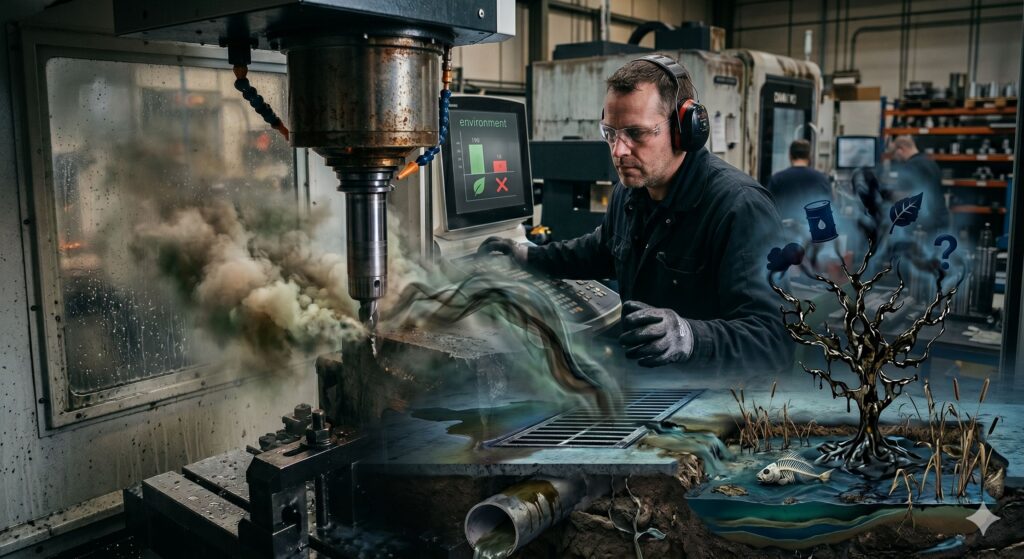
1. The Lifecycle Dilemma: Where the Impact Lies
To truly understand how cutting fluids affect the environment, we have to look at their entire lifecycle: from creation to disposal.
- Petroleum Extraction: Traditional mineral-oil-based fluids rely on fossil fuels. The refining process itself is energy-intensive and contributes to carbon emissions before the fluid ever reaches a machine shop.
- The Chemistry Cocktail: Cutting fluids aren’t just oil and water. They are packed with additives: biocide agents (to stop bacteria growth), extreme-pressure additives (like chlorine or sulfur), anti-foaming agents, and emulsifiers. Many of these chemicals are hazardous by nature.
2. The Core Environmental Challenges
When cutting fluids are used, mismanaged, or discarded, they present three primary environmental threats:
A. Waste Disposal and Water Pollution
Cutting fluids don’t last forever. Over time, they become contaminated with “tramp oil” (hydraulic oil leaking from the machine), bacteria, and fine metal particles. When the fluid becomes unstable, it must be disposed of.
If untreated fluid enters waterways, the impact is devastating. The oils form a film on the water surface, blocking oxygen from entering. Meanwhile, the chemical additives can be toxic to aquatic life, disrupting entire ecosystems and contaminating local water tables.
B. Air Quality and Factory Emissions
During high-speed machining, the intense heat vaporizes cutting fluids, creating an airborne mist or smoke.
- Outside the shop: If ventilation systems vent this mist directly outside without proper filtration, it contributes to localized air pollution.
- Inside the shop: This mist poses a direct health hazard to machinists, potentially causing respiratory issues and skin irritation (dermatitis).
C. The Heavy Metal Carrier
As coolant washes over workpieces made of aerospace alloys or heavy metals (like nickel, cobalt, or chrome), microscopic particles become suspended in the liquid. This turns a standard chemical waste into a hazardous heavy-metal sludge that requires specialized, energy-intensive recycling processes to neutralize.
3. The Shift to Sustainable Alternatives
The manufacturing world isn’t ignoring these challenges. Driven by both environmental ethics and strict government regulations, the industry is pivoting toward cleaner, smarter solutions.
Bio-Based Lubricants (Vegetable Oils)
One of the biggest breakthroughs has been the rise of biodegradable cutting fluids derived from vegetable oils (like canola, soybean, or rapeseed).
- The Advantage: They are renewable, non-toxic, and break down naturally if spilled. Furthermore, vegetable oils often have a higher flashpoint and better lubricity than mineral oils, meaning they actually perform exceptionally well in heavy-duty cutting.
Minimum Quantity Lubrication (MQL)
Why use gallons of fluid when a few drops will do? MQL, also known as “near-dry machining,” blends a tiny amount of biodegradable lubricant with compressed air. It applies a microscopic mist precisely to the cutting edge.
- The Environment Win: MQL virtually eliminates the need for fluid disposal because the lubricant is entirely consumed during the process, leaving the chips dry and easy to recycle.
Cryogenic Machining
Instead of chemicals, some advanced shops are using liquid nitrogen ($LN_2$) or carbon dioxide ($CO_2$) cooled to sub-zero temperatures. The gas freezes the cutting zone to manage heat and then evaporates harmlessly back into the atmosphere, leaving zero chemical residue behind.
The Bottom Line: A Cleaner Path Forward
Cutting fluids will remain vital to manufacturing for the foreseeable future; we simply cannot shape the world’s hardest metals without them. However, the days of the “dirty, oily machine shop” are fading.
By adopting bio-based fluids, investing in MQL technology, and implementing strict recycling loops within the shop, manufacturers can dramatically reduce their environmental footprint. Going green isn’t just about saving the planet—it’s about optimizing efficiency and protecting the people who keep the wheels of industry turning.
Please get a free quote from Harry Yen hyen@unisontek.com.tw All of us are looking forward to your good news and invite you to visit our factory in Taiwan. Welcome to send any inquiry to us! Please watch presentation of our company on YouTube Link.